The story of the sport began in England in 1924, when the Camberley Motor Cycle Club organized the Southern Scott Scramble race on the heaths of Surrey. The race consisted of two laps run on a 25-mile course, and the fastest rider won. In England, the event was called a “scramble,” but in France and Belgium, the form of competition soon became established under the name moto cross.
After the Second World War, motocross grew rapidly. The first Motocross des Nations was held in the Netherlands in 1947, the FIM established the European Championship series in 1952, and the official World Championship series started as early as 1957. Early tracks closely followed the natural contours of the terrain with their long laps and gentle jumps, so success required, above all, iron physical endurance.
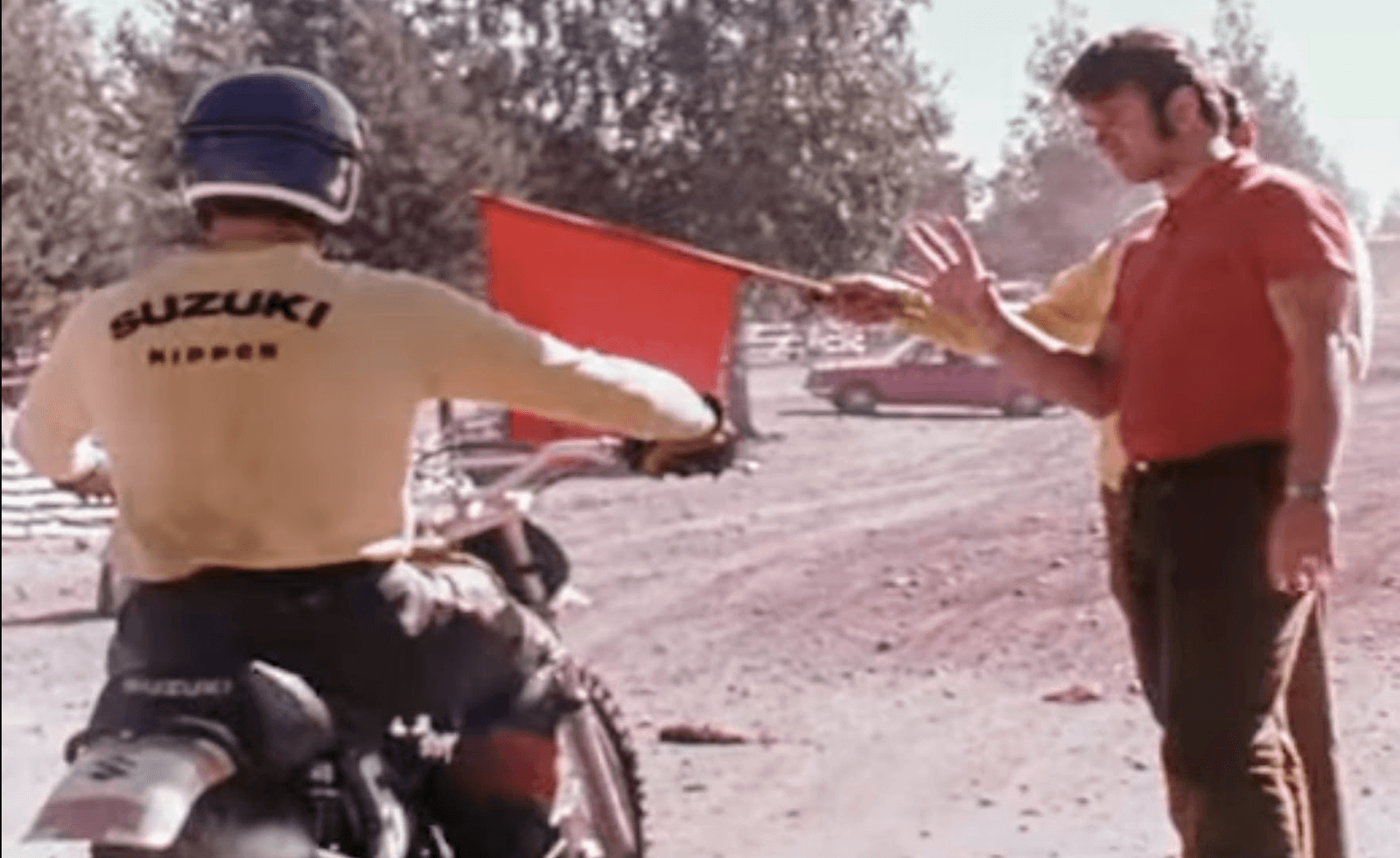
In North America, motocross was relatively unknown for a long time until 1966. That year, importer Edison Dye brought Swedish world champion Torsten Hallman and Husqvarna to the United States. Hallman dominated the events in exhibition style and won every heat.
Inspired by the success, Dye founded the Inter-Am series the very next year, and the AMA followed suit by launching its own Trans-AMA series in 1970. European stars such as Roger De Coster, Joel Robert, Åke Jonsson, and Heikki Mikkola dominated the competitions while simultaneously teaching the Americans the secrets of the sport.
In the United States, the sport began without old traditions, and the local entertainment industry soon demanded a new kind of spectacle from it. Large stadiums provided the stage the sport craved.
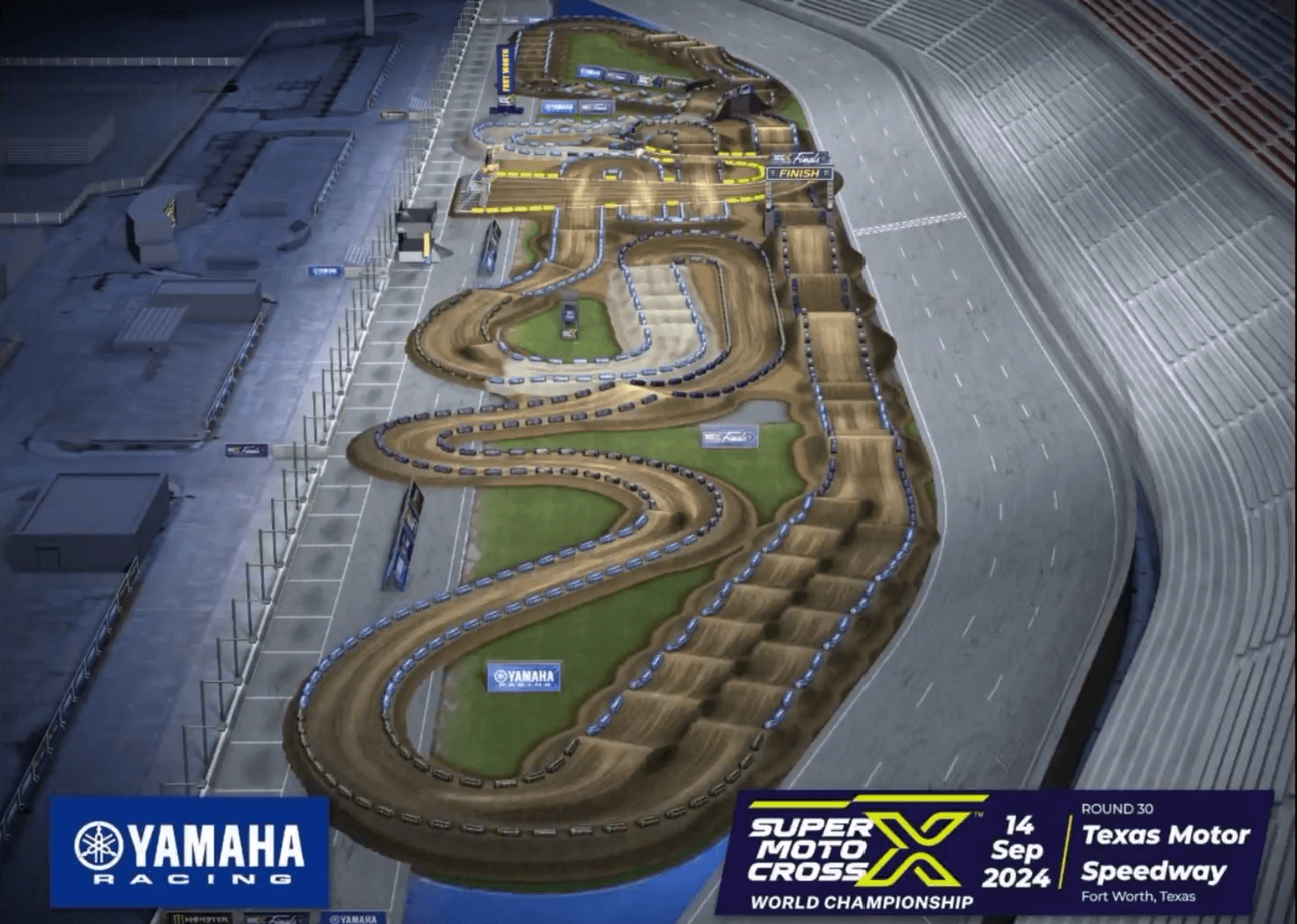
The first stadium motocross in the United States, the Superbowl of Motocross, was held on July 8, 1972, at the Los Angeles Coliseum. There were no ready-made terrain features on the flat grass, so the track had to be built from scratch to be as spectacular as possible. In 1974, the AMA started a supercross series alongside the outdoor series, and by the end of the 1970s, stadium competitions had overtaken traditional outdoor tracks in attendance in the United States.
With artificial features, the equipment was required to have even better capabilities. Rough jumps became safer as the suspension travel of the bikes grew to modern dimensions. The development was started by Yamaha, which introduced the Monoshock rear suspension in 1973, doubling the suspension travel. Soon other manufacturers followed: Kawasaki brought its Uni-Trak suspension to the market, and Suzuki its Full Floater suspension.

In Europe, tracks that followed the natural terrain held their ground for a long time, which is why American track culture with its jumps and rhythm sections only arrived on the old continent around the mid-1980s. On the new tracks, riders searched for their lines through series of double, triple, and tabletop jumps, as well as whoops. High berms were shaped into the corners, which were taken at almost full throttle.
In Europe, supercross remained only as separate events and did not develop into its own series alongside the FIM Grand Prix motocross. Nevertheless, traditional outdoor tracks became more compact and gained more technical and artificial features, which allowed the audience to follow the competition more extensively from one location.
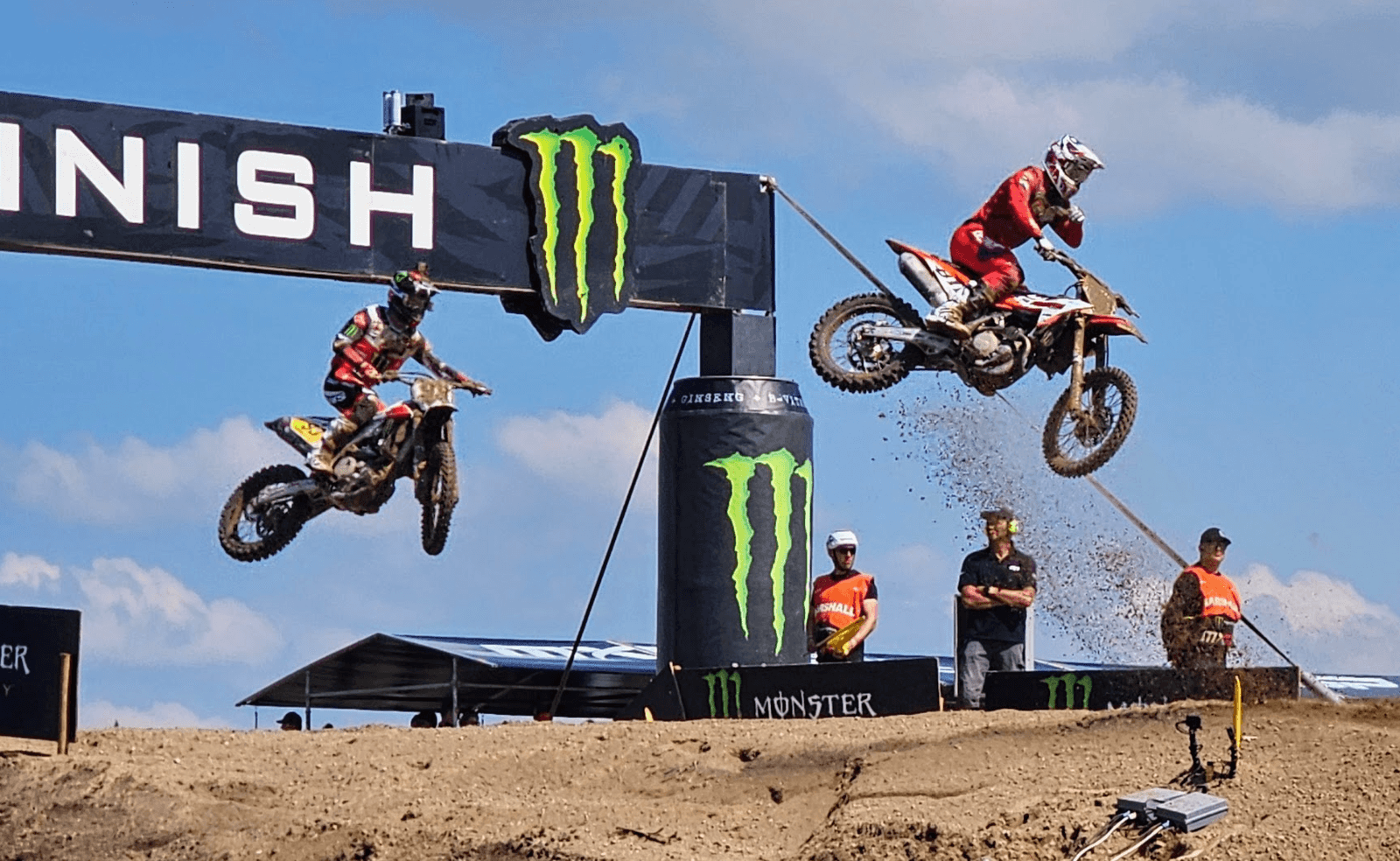
The commercialization of the World Championship series gained new momentum from the mid-1990s onwards, when TV rights and marketing were centralized under one promoter. The series was built into a unified product for television and later for streaming services. Because the goal was to offer easier-to-follow and spectacular action for the broadcast and the viewers, the tracks were tightened and artificial features were added to them. This reinforced the trend towards a more technical and spectacular riding style, while the series became even more professional.
For the more experienced generation of riders, this transition was a difficult situation, as changing old, accustomed riding habits and styles was hard. The traditional sport had relied more on pure physical endurance than on extremely refined riding technique. The new trend required, in addition to high fitness, a significantly more flexible and technical riding style. As a result, the older guard began to fall behind, and a new generation took their place at the top of the sport.