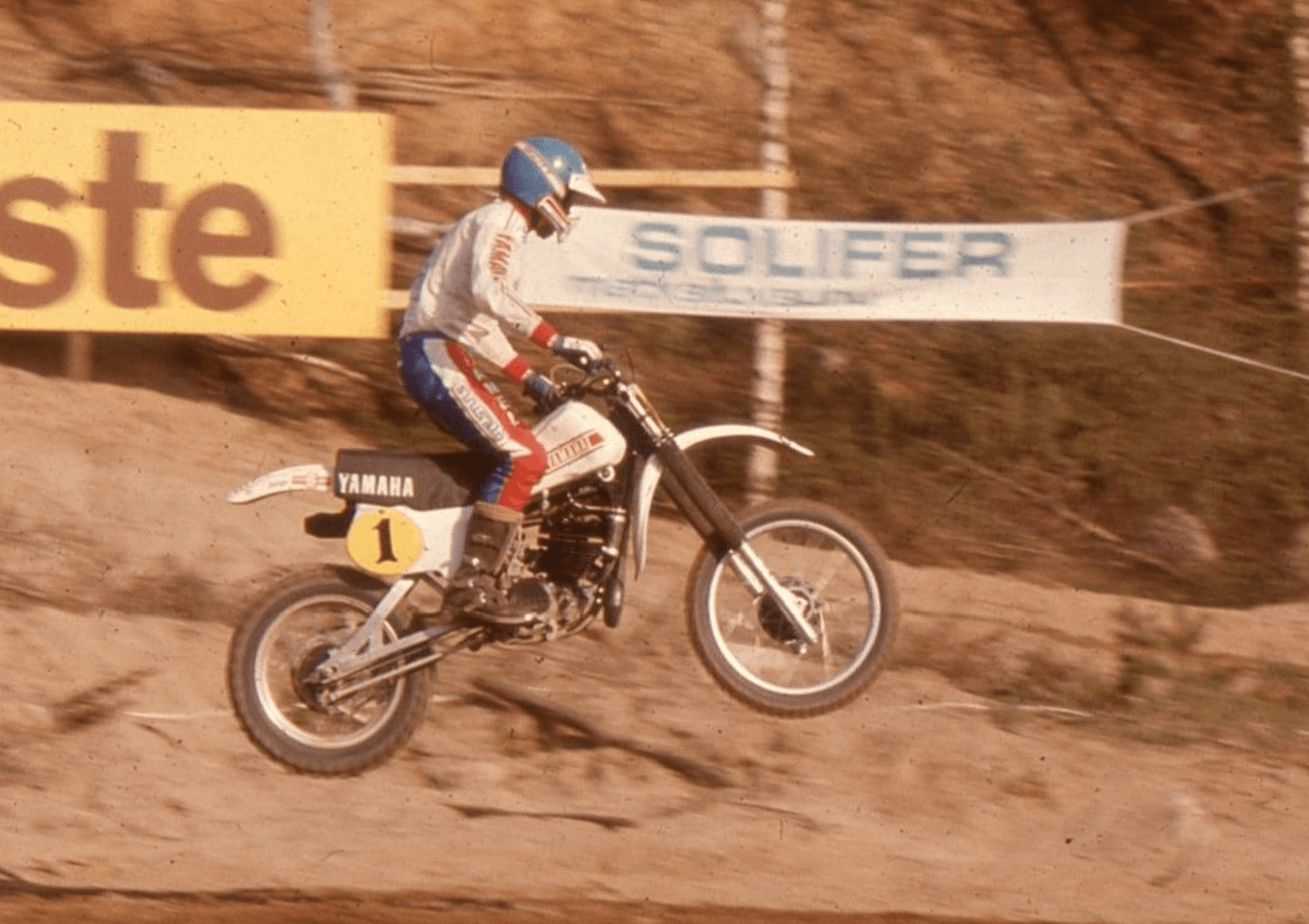
In February, Mikkola predicted he would win the championship, and it wasn’t bragging. The bike was one of the best in the series, his fitness was top-notch, and although he didn’t say it out loud, he knew he was the best rider in the field. He estimated his biggest threat to be the Honda factory rider, American Brad Lackey.
He also knew his main challenger was Brad Lackey
The prediction began to come true right at the opening race in Payerne, Switzerland, where Mikkola won both heats effortlessly. Lackey crashed in the first heat and finished sixth, but climbed to third in the second.
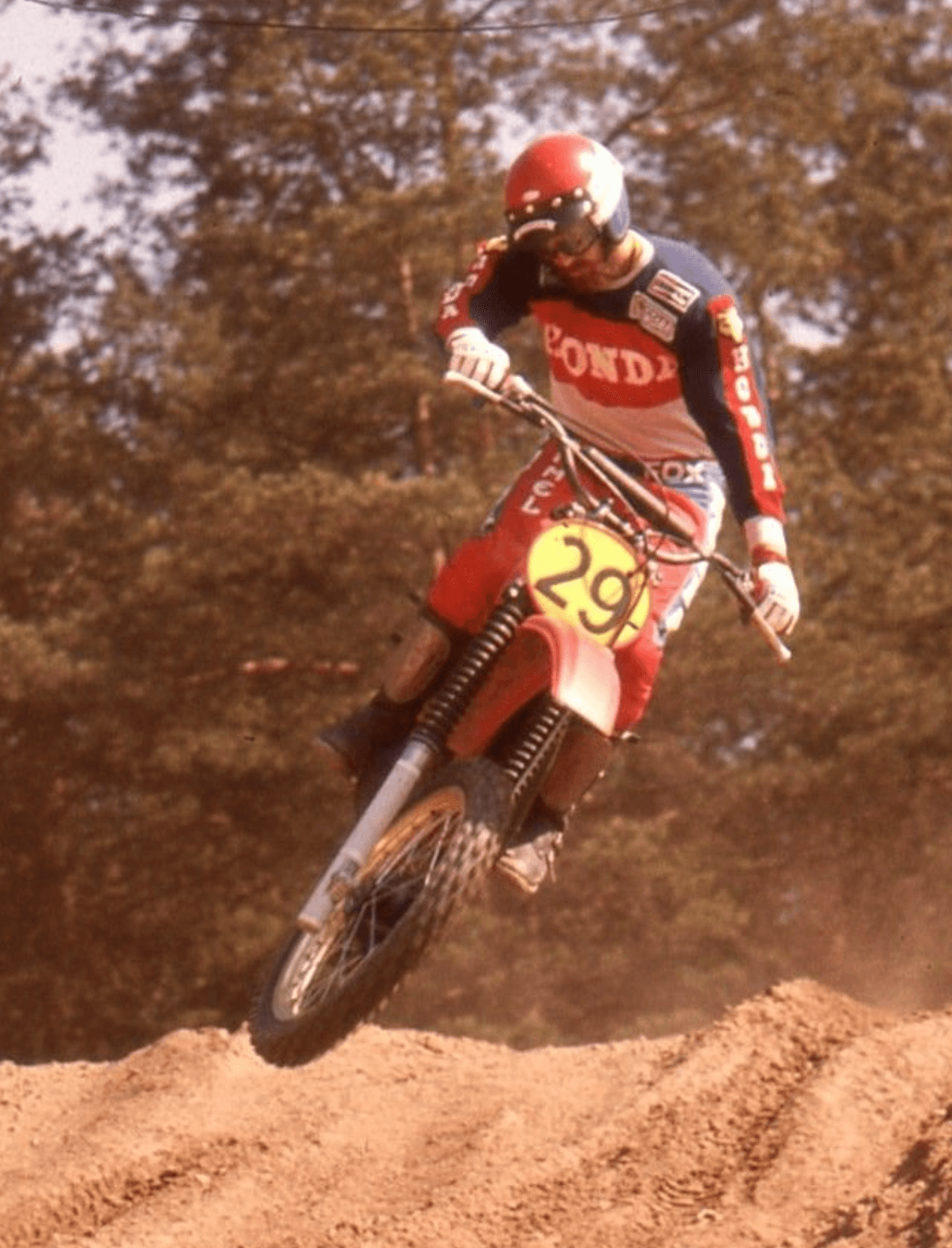
In Austria, the situation tightened. An unknown virus sapped Mikkola’s strength, and Lackey snatched a heat win and a second place, narrowing the gap to two points. In France, the Finn returned to his old self. He and Lackey shared a win and a second place. A duel seemed inevitable, but in Denmark, Mikkola took maximum points, and that began his escape toward a record point total. Lackey defeated him once more in Italy and once in Britain, but none of those turned the overall picture.
The season’s only retirement came in Sweden, when the chain jumped off and got stuck in the countershaft sprocket. It was pure bad luck. Otherwise, the bike held up: the machine prepared by mechanic Heikki Penttilä carried Mikkola to the finish in 23 out of 24 heats.
In Namur, Belgium, Lackey locked up second place in the series. In the next round in Luxembourg, he was hit at the very start, and for Mikkola, just riding was enough to secure the championship. Lackey left for home early to recover and prepare for the Trans-AMA series. He had finished 18 out of the 21 heats he started.
Other competitors predicted to be his main challengers suffered from problems
The rest of the field was left far behind. Five-time world champion Roger De Coster had been badly injured back in February and was later hospitalized, where he had his spleen removed. In Payerne, he still finished second and fourth, but in Austria, the gearbox jammed in the first heat, and after that, crashes and retirements messed up his results. He accumulated six retirements, and third place with 171 points was his weakest finish in the World Championship series in seven years. The 34-year-old was the oldest rider in the class, and he himself blamed the equipment. At the beginning of the season, he said the bike was behind other Japanese bikes in terms of power and characteristics.
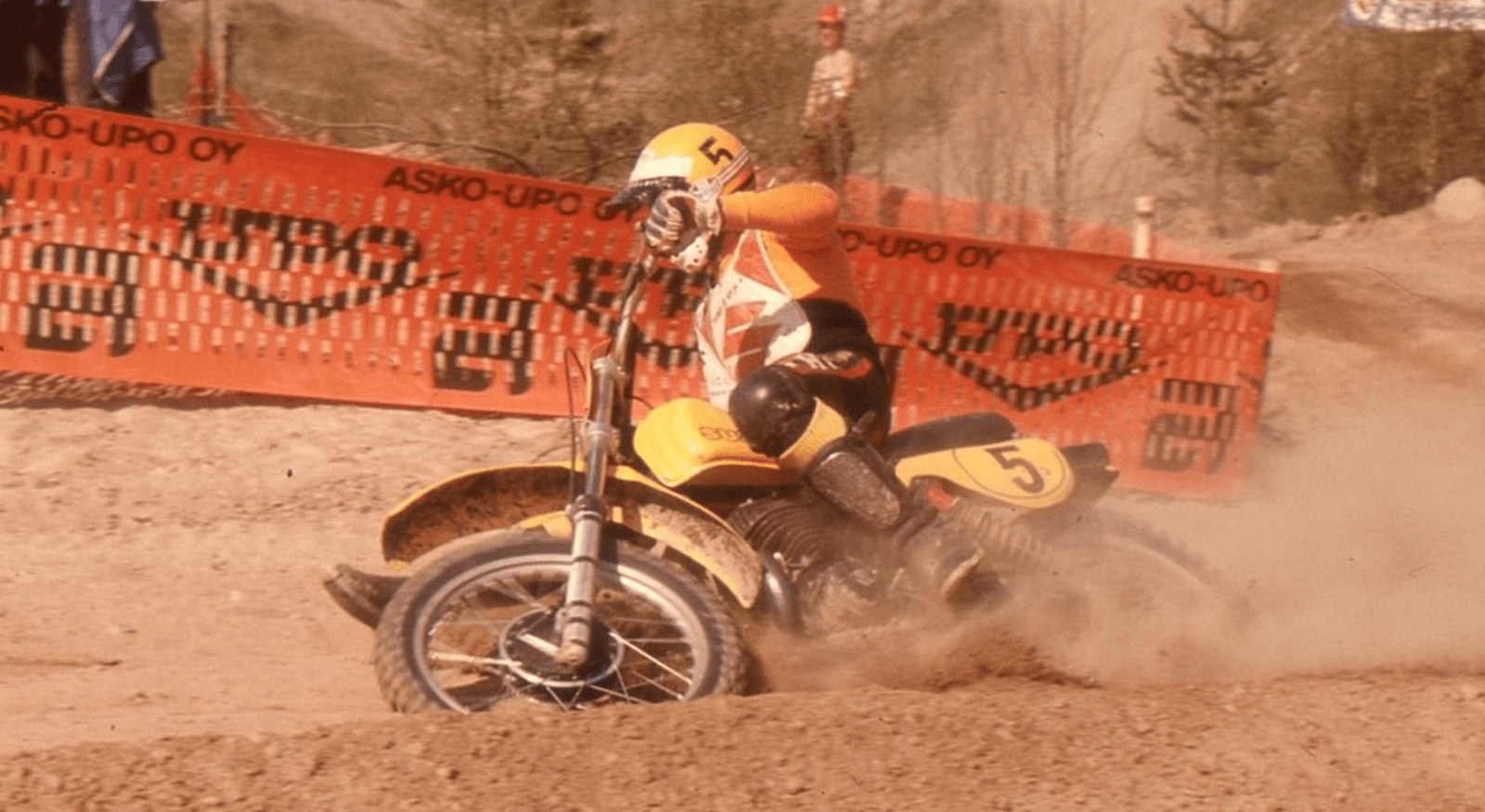
Finishing fourth was West German Herbert Schmitz, which was the best result of his career. The Maico rider was calm by nature, and in America, he beat Mikkola once by a clear margin. Fifth was De Coster’s Suzuki teammate Gerrit Wolsink, whose season included eight retirements and recurring chain problems. He has said himself that he easily blames his own riding for the breakdowns, and it ate away at his self-confidence.
Sixth place went to 22-year-old KTM factory rider André Malherbe, who had been third in the 250 series the previous year. In his first 500 season, his best results were third places in Finland and France. Behind him was Honda rookie Graham Noyce. In Switzerland, he destroyed his bike in a crash, in Austria the chain came off once and twice in France, and by the time he reached Denmark, he had ridden too few 45-minute heats to be in top shape. The season continued as a series of faults, jams, collapsed forks, and crashes, and Noyce wondered aloud why his teammate Lackey didn’t have the same problems.
The numbers speak for themselves: 14 wins out of 24 heats and Mikkola’s third 500-class world championship. He led the series from start to finish.