His Own Path
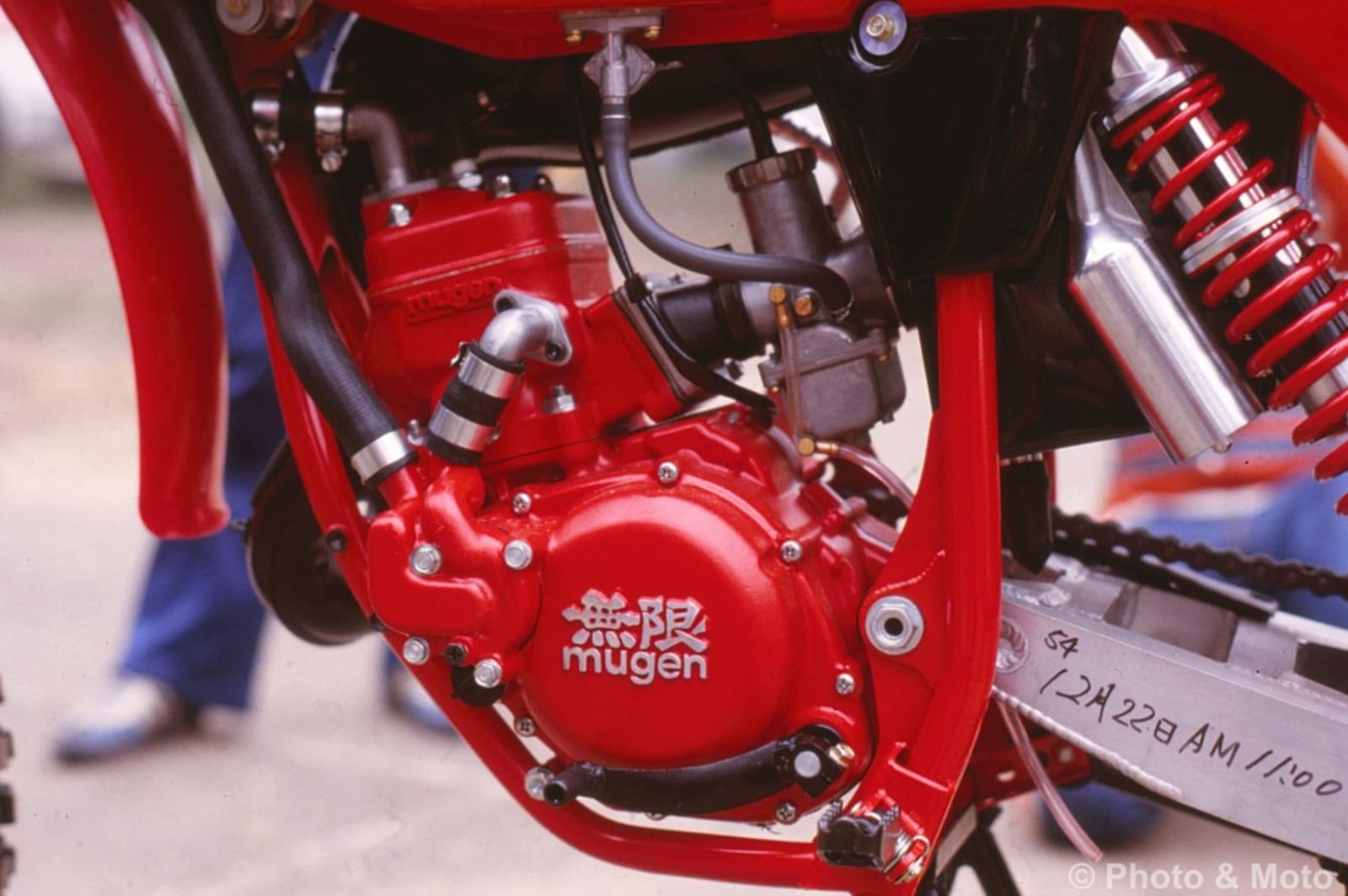
Hirotoshi Honda founded Mugen Motorsports (meaning “unlimited”) in 1973 to prove his skills, as his father, Honda founder Soichiro Honda, had forbidden hiring relatives for company management.
Hirotoshi acted differently from his father, who despised two-stroke engines and favored four-stroke technology, because Hirotoshi knew that lightweight and high-revving two-stroke machines were the only way to win in motocross.
Aftermarket Parts and the ME360R
Initially, Mugen sold aftermarket parts for standard Honda CR125 and CR250 Elsinore bikes, and these handmade parts (such as cylinders, heads, and Mikuni carburetors) provided a huge boost in power.
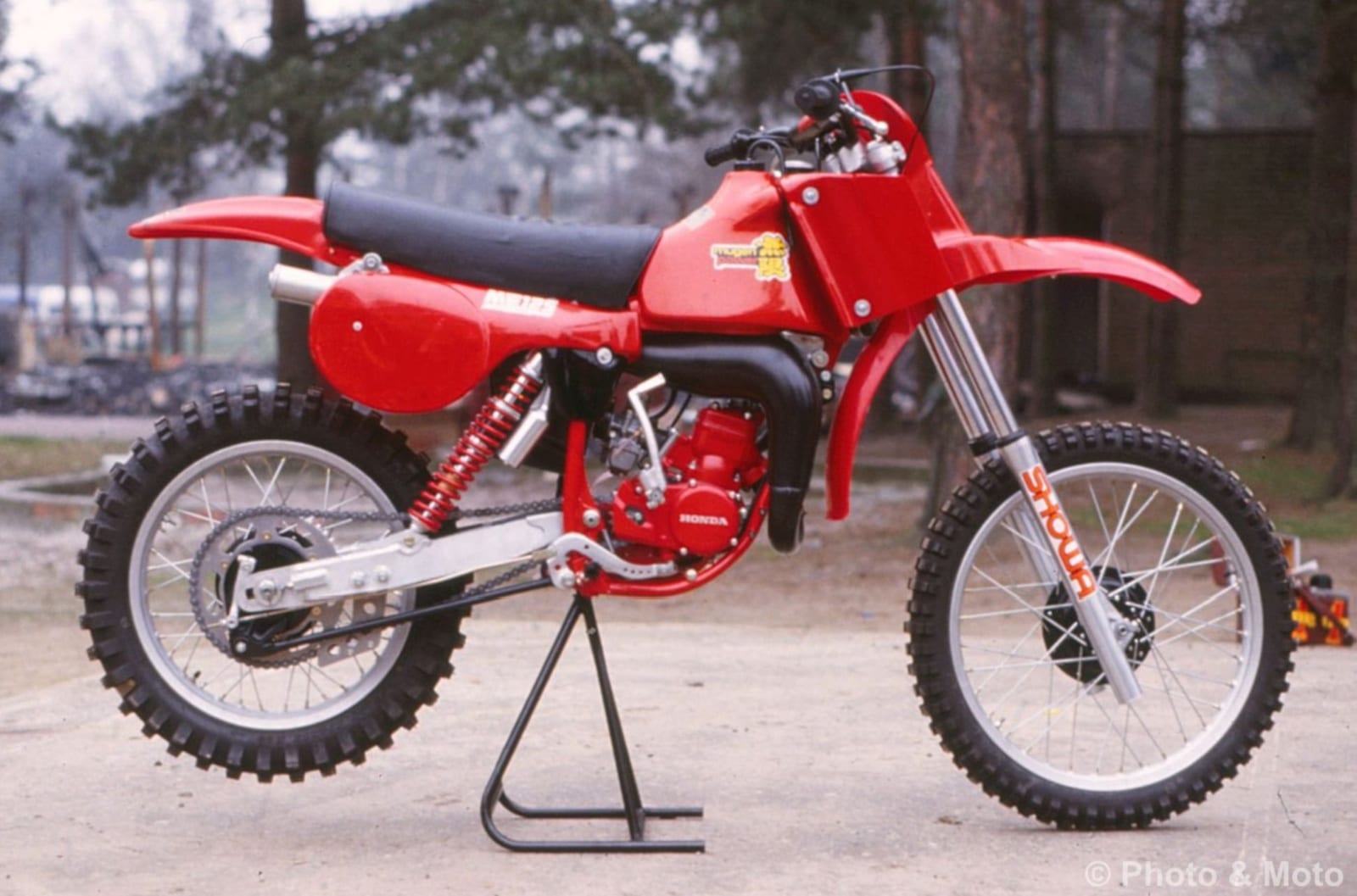
In 1978, Mugen seized the opportunity when Honda was winning races in the 500cc Open class but refused to sell similar bikes to the general public, so Mugen released the ME360R kit, which allowed anyone to turn a standard Honda CR250 bike into a powerful Open-class racer.
Johnny O’Mara and the ME125-W1
In 1980, Mugen built a stunning, all-white, and largely handmade special bike, the Mugen ME125-W1, which featured, among other things, liquid cooling and a fiberglass tank.
Al Baker’s team brought the bike to America and chose an unknown Southern Californian, Johnny O’Mara (“The O’Show”), as its rider. He surprised everyone by beating the world’s best riders on the muddy Mid-Ohio track at the 125cc USGP on July 27, 1980, and O’Mara later said that this bike was even better than Honda’s own factory bike the following year.
Today
Because building these complete race bikes cost nearly four times as much as a standard Honda, the team competed in America for only one year, after which Mugen moved into car racing, such as Formula 3000 and Formula 1.
These early white-and-red bikes are now among the most valuable and sought-after collector’s items in the world, and in recent years, Honda and Mugen have once again joined forces to design new electric motocross prototypes, such as the E.Rex.