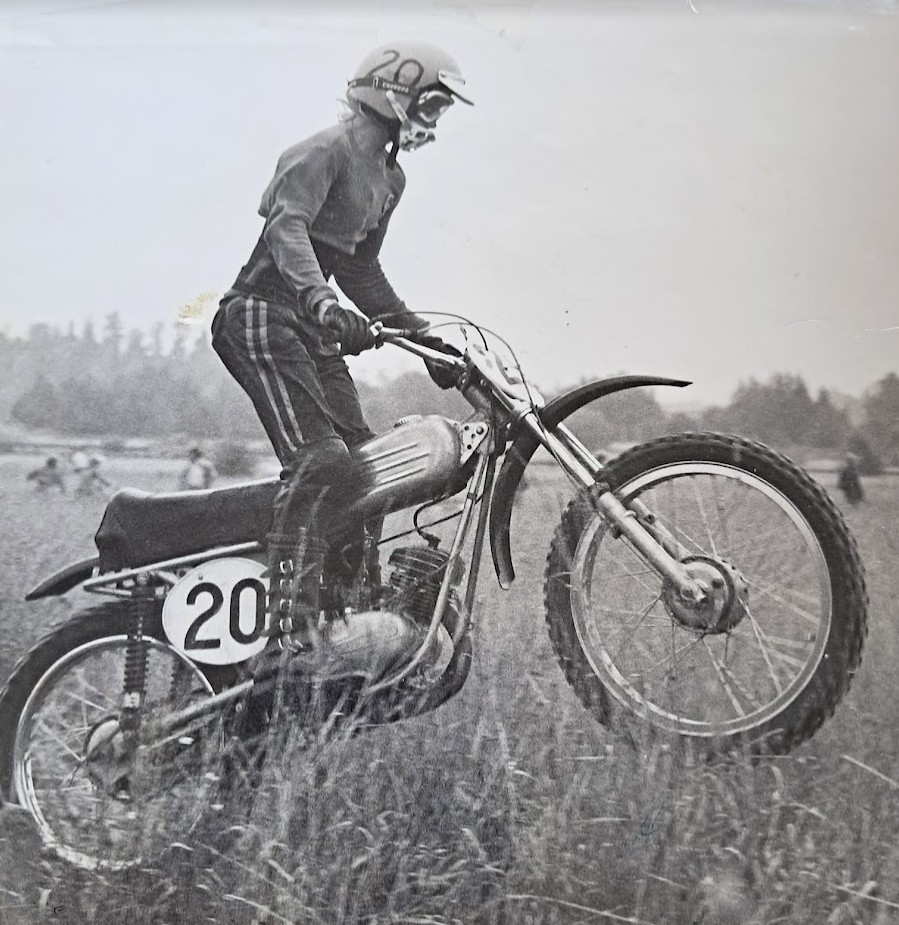
This story begins in the lull that followed the Second World War — not on race circuits, but in the post-war calm. Sweden’s industrial infrastructure had survived the upheaval intact, laying a solid foundation for the strong economic growth of the 1950s and 60s. As prosperity spread, families had, for the first time, the means to invest in leisure and hobbies.
The role of the motorcycle shifted from a traditional utility vehicle to a symbol of freedom and adventure. Nordic nature offered the perfect setting for this evolution: gravel roads winding through Sweden and Finland, alongside abandoned post-war gravel pits, became the kingdoms of the youth. On these unsupervised arenas, anything with a motor and two wheels was ridden — from mopeds to stripped-down street bikes.
The gravel pits became a world of their own for the young, but the most talented enthusiasts soon hit a wall. The desire to test their wings in official competition grew, but the road forward was blocked.
Hitting the Wall
Strict legislation in Finland and Sweden set the minimum age for official motocross competition at 16, treating racing equipment the same as road-going motorcycles. This left an entire generation without a developmental path in the sport during its most critical age.
With no clear career route, many young riders drifted to other sports like ice hockey or football. Others continued their hobby unofficially, hidden in the gravel pits, far from organized sport.
Meanwhile, international stars like Torsten Hallman and Heikki Mikkola dominated the world circuits. These idols served as enormous inspiration for the gravel-pit boys, proving that success was possible — if only the chance to compete could be arranged.
The Winding Detour
The solution came in the form of the 50cc class. By limiting engine size, clubs and federations succeeded in creating a class that the law did not interpret as a true motorcycle. This made it possible for 12–16-year-olds to compete on closed tracks even before driving age. In Sweden the sport was known as “knatte cross”, and from there it landed in Finland as “nappulacross”.
By limiting engine size, clubs and federations succeeded in creating a class that the law did not interpret as a true motorcycle.
The first machines were often stripped-down mopeds. While these street mopeds were modest by any standard, the tuning and the spirit of the paddock were a central part of the hobby. The class established itself as an official competition format around 1972.
Machines Evolve
Technical development was rapid, and Solifer brought a full-blooded Minicross race bike to the market. It featured a lightweight frame, a tuned 7-horsepower engine, a 5-speed gearbox, and purpose-built suspension. This factory-built package transformed the nature of the sport from mere fun riding into goal-oriented competition.
The factory-built package transformed the nature of the sport from mere fun riding into goal-oriented competition.
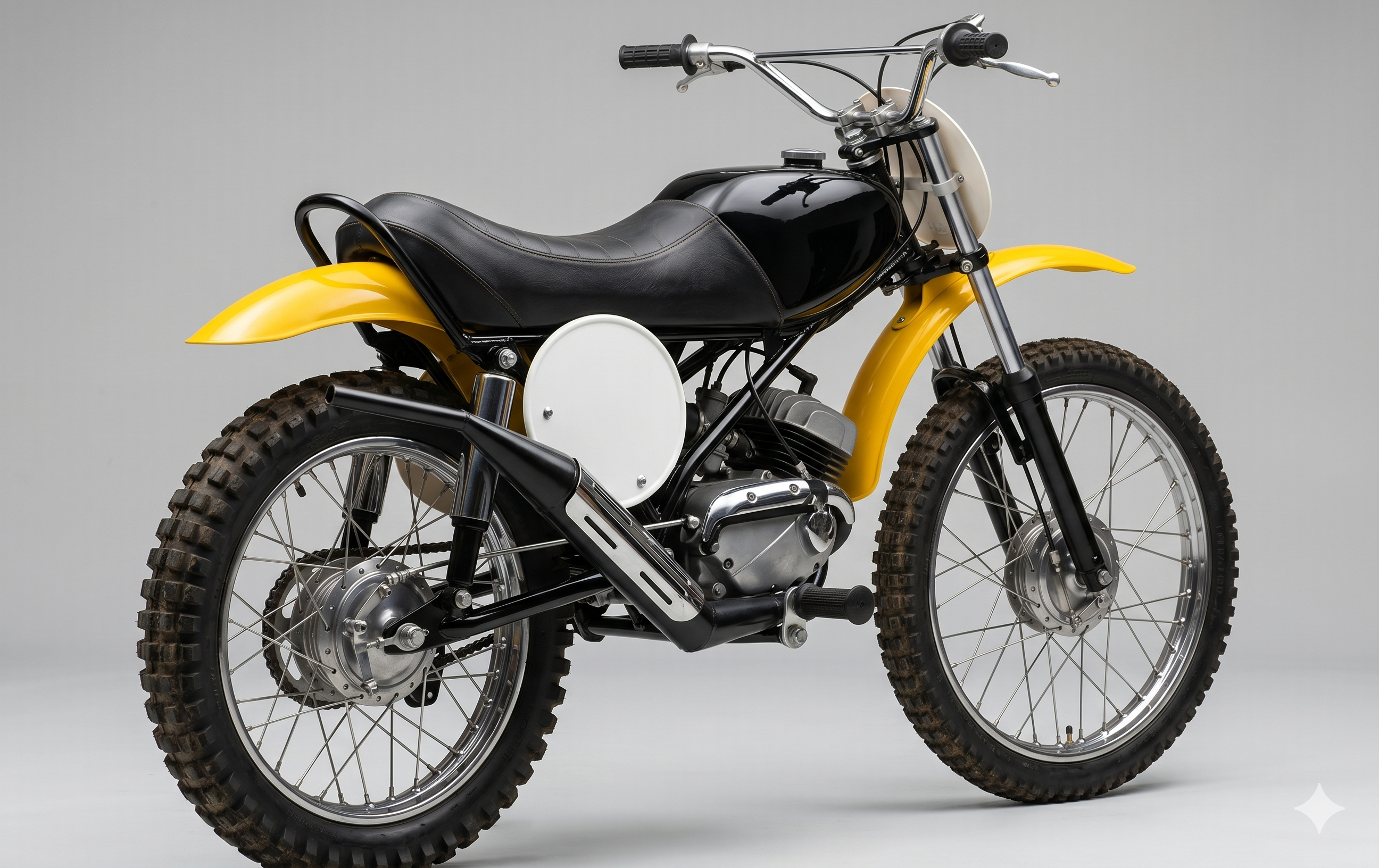
By 1974, the level rose further when Monark introduced its model with a 15-horsepower Sachs engine. Zündapp also established itself as a strong competitor, and the tuned mopeds of the early days were finally relegated to the dim corners of history.
The Role of Organizations in the Sport’s Popularity
Minicross’s popularity raised the youth activities of motor clubs to a new level. Big-name role models like Heikki Mikkola inspired the young to take up the sport. The Hyvinkää Motor Club’s investment is a case in point: the club acquired its own Solifer race bike, which under the leadership of pastor Seppo Karttunen offered many young people their first taste of motorsport.
The Finnish Motorcycle Federation worked actively to raise the sport’s profile at the time. A significant milestone was the Ruskeasanta TV-Minicross, produced in collaboration with Finland’s national broadcaster Yle. Conveyed by legendary commentator Juha Jokinen, the atmosphere of the youth class brought the excitement directly into Finnish homes — offering speed without the smell of exhaust fumes.
The Starting Line Fills Up
The growth of the sport culminated in the statistics of 1974. On August 4, in conjunction with the Hyvinkää Motocross World Championship, 37 riders from 15 different clubs lined up on the start line of the 50cc C-class. Monark had captured the market with 22 bikes, while nine riders trusted Zündapp. The remaining starting positions were filled by Solifers and Tunturis — the latter manufacturer having produced a small batch of specially tailored models.
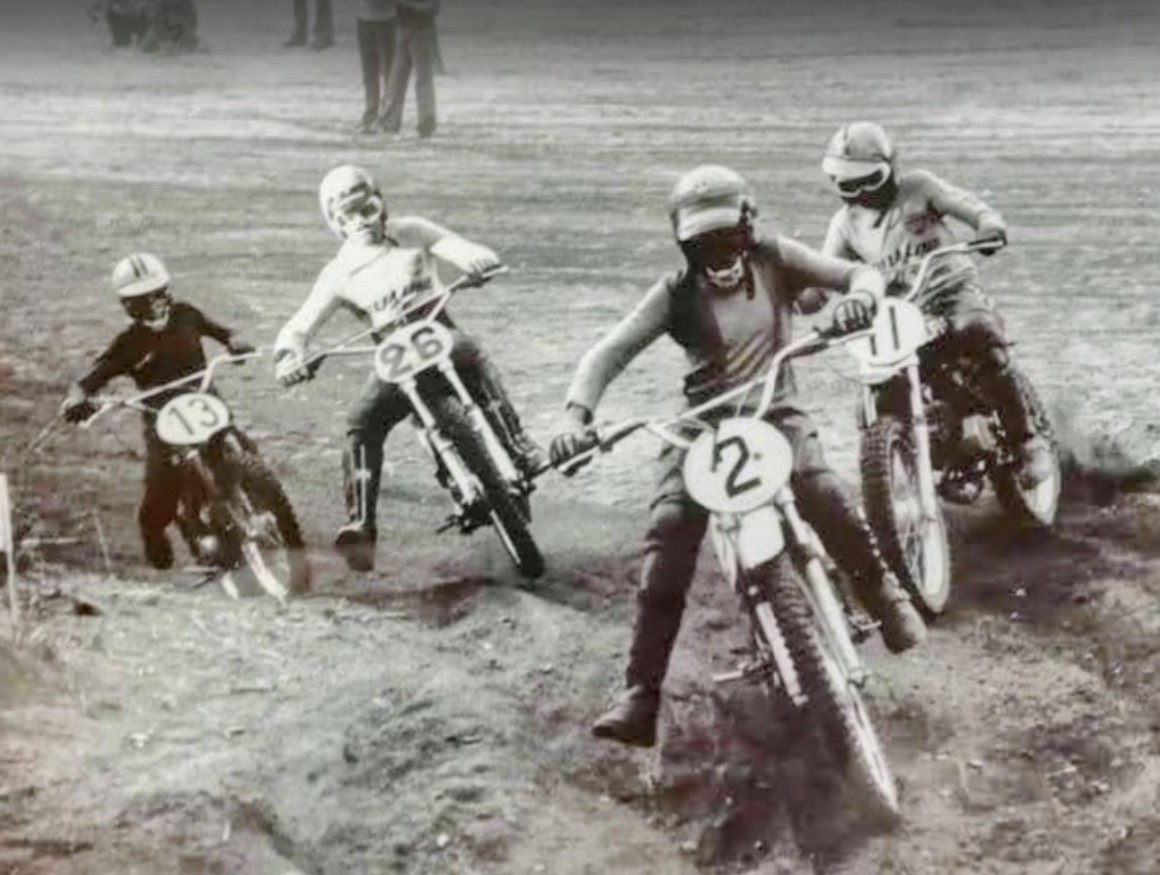
The race was won by Tikkurila Motor Club’s Jarmo Paavola on a Monark. Second place went to Kari Virta on a Tunturi, and third to Arto Wilkman on a Zündapp — both representing Hyvinkää Motor Club.
| No. | Rider | Bike | Club |
|---|---|---|---|
| 1 | Asko Hevonkorpi | Monark | HäMK |
| 2 | Pekka Veräväinen | Monark | KaMoKe |
| 3 | Arto Wilkman | Zündapp | HyMK |
| 4 | Kari Rantanen | Monark | HäMK |
| 5 | Bengt Luotonen | Monark | TiMK |
| 6 | Kari Virta | Tunturi | HyMK |
| 7 | Jukka Ahonen | Monark | HäMK |
| 8 | Harri Ahokas | Zündapp | HyMK |
| 9 | Esa Bang | Solifer | TMK |
| 10 | Markku Bang | Solifer | TMK |
| 11 | Kaj Heinonen | Monark | SMS |
| 12 | Sauli Rasi | Monark | OriMK |
| 13 | Leo Salmi | Monark | HäMK |
| 14 | Jouni Pesonen | Monark | TuMK |
| 15 | Kai Wirama | Monark | TuMK |
| 16 | Jukka Kärkkäinen | Monark | HMS |
| 17 | Ari-Matti Viiri | Solifer | EMK |
| 18 | Jari Ronni | Monark | KaMoKe |
| 19 | Jyrki Niemi | Monark | TuMK |
| No. | Rider | Bike | Club |
|---|---|---|---|
| 20 | Hannu Jokinen | Monark | KaMoKe |
| 21 | Mauri Penttilä | Monark | KaMoKe |
| 22 | Jukka Veräväinen | Solifer | KaMoKe |
| 23 | Tom Flink | Monark | HMK |
| 24 | Kari Laaksonen | Zündapp | HMS |
| 25 | Bengt Lundström | Monark | S |
| 26 | Jouni Erälähde | Solifer | HMS |
| 27 | Timo Takatalo | Monark | SMS |
| 28 | Pasi Jokela | Tunturi | TMK |
| 29 | Esa Kasper | Zündapp | HyMK |
| 30 | Kim Ljungqvist | Zündapp | HMK |
| 31 | Olli Salonen | Monark | HäMK |
| 32 | Arto Smedberg | Solifer | Y-SMK |
| 33 | Petri Matilainen | AGS-Zündapp | KMMK |
| 34 | Jarmo Paavola | Monark | TiMK |
| 35 | Jari Taponen | Zündapp | TiMK |
| 36 | Jari Lehto | Monark | TMK |
| 37 | Veli-Matti Alanen | Zündapp | HMS |
37 riders | 15 clubs | 4 bike brands
The End of an Era: The Rise of the 80cc
In the late 1970s, the era dominated by the 50cc began to approach its end. A new 80cc class took ground and forced minicross into a fundamental transformation. Japanese industrial giants like Yamaha, Suzuki, and Kawasaki introduced technically advanced models that offered better suspension, more speed, and easier availability than the traditional European 50cc machines.
Original minicross as a hobby provided a critical competitive pathway for young riders who had previously been blocked from moving forward.
Original minicross as a hobby provided a critical competitive pathway for young riders who had previously been blocked from moving forward. The enablers of this development were the rules of the 50cc class, the selfless contribution of motor clubs, and the example set for the gravel-pit boys by giants like Heikki Mikkola.
The sport quickly matured from informal backyard riding into goal-oriented competition with established series and full-blooded race equipment. Although technology evolved, the 50cc era laid that solid foundation for Nordic hobby culture, which went on to bear successful fruit in the later 80cc series. Today the C 80cc class is the C 85cc class, and remains one of the largest classes by participant numbers.